


Nursery School vs Preschool Understanding the Key Differences
Submitted by thaiairvn_admin on Tue, 02/10/2026 - 17:26
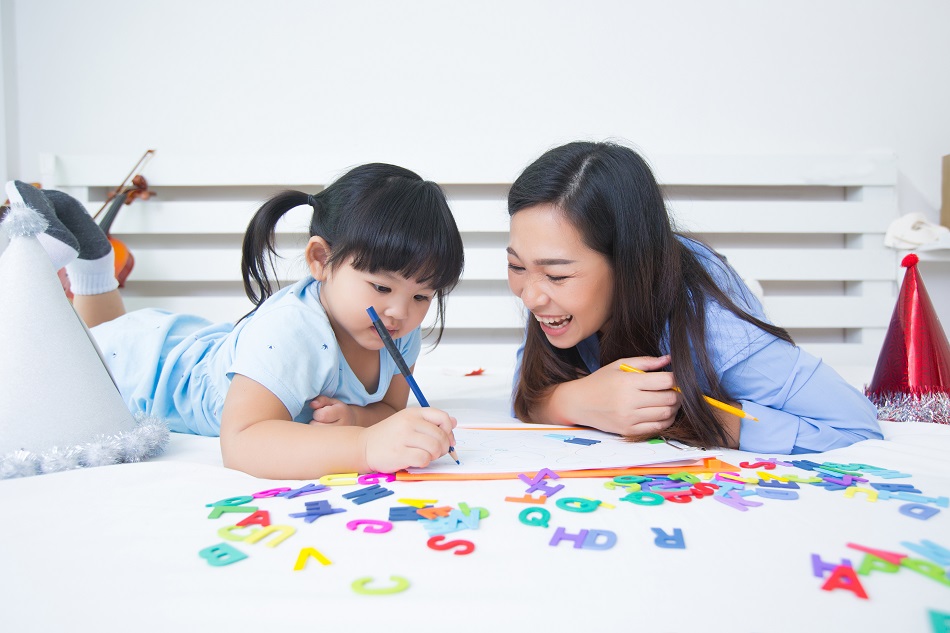
It's important for parents considering their child's early education to know the difference between nursery school and preschool. Although care and early childhood education are offered in both types of programs, they vary by ages served, organization, curriculum and primary purpose.
Age requirements and eligibility
Nursery schools have a younger age range of children when compared to other schools, between the ages of one and three rather than two and five, or three and four. These are facilities meant to care for the tiniest ones among us. Preschools, however, usually serve children from 3 to 5 years of age. The preschool's main purpose is to provide a smooth transition from home to school life.
Educational focus and curriculum structure
The nursery school's curriculum is usually based on playful learning, or social and emotional development. Activities are designed to support your little one in the development of their gross and fine motor skills, sensory exploration and regulation. Yes, there is a learning part to it but the setting is much less structured than a preschool.
Early childhood (classroom/preschool) Early childhood education must be based on principles designed for young children and should have their development as a starting point. From the National Association for the Education of Young Children (NAEYC), high-quality preschools emphasize pre-literacy, language, and mathematical skills as well as emerging cognitive abilities. These sorts of settings allow children to experience a classroom-like routine, complete with group activities, structured lessons and targeted learning objectives meant to prepare them for the scholastic expectations of elementary school.
Staffing and teacher qualifications
Teacher training can be quite different from one environment to the other due to regulations in a given region. In most cases, nursery school workers must hold a specialized certification in early childhood and infant safety. The teacher-to-child ratio is often smaller for infants and toddlers as the emphasis is more on caregiving to make sure that each infant or toddler has their needs met.
It’s common for preschool teachers to have a degree in early childhood teaching, and even specific certification as a teacher. These programs are as much about instruction as they are care. Although the teacher to child ratio is still small compared to primary schools, it is higher than a nursery no doubt as older children are more independent.
Operational hours and flexibility
Many nursery schools also have more extended-hours because many working parents require full-day child care throughout the year. Preschools, especially those run by school districts or private schools, frequently operate off of a traditional academic schedule. They may provide half-day programs or be open only during the school year, taking breaks for holidays and summer vacation.
Social and developmental benefits
Both social contexts are important for peer interaction, albeit in different ways across children’s development. In a nursery environment, youngsters are taught parallel play and the rudiments of sharing. Social interaction in a preschool environment is more collective. Children take on complex group projects and practicing following multi-step directives from a direction-giving figure who is far above them, an essential skill for future success in formal education.
Selecting the best environment for your child will be largely affected by his or her age, developmental readiness, and the family's personal situation. Nursery Schools don’t offer as strong a foundation that’s required for the youngest children, and preschools do not offer enough structure needed when preparing to enter elementary level school.